

Profiling Objective and Subjective Measures of the Ocular Surface: Comparing Preserved and Preservative-Free Glaucoma Medications
Eye Drops are a cornerstone of management of glaucoma. However the funded available drops in New Zealand currently contain preservatives, most commonly benzalkonium chloride (BAK), that helps extend the shelf life of the medications through preventing microbial contamination, but can also cause issues in and of itself. BAK has been associated with damage to the ocular surface with symptoms such as dryness, burning and irritation, negatively affecting the quality of life of many glaucoma patients. This can lead to less medication adherence and ultimately can compromise glaucoma control and increase the risk of vision loss.
Preservative-free (PF) formulations have emerged as a potential alternative. Previous studies suggest that PF glaucoma medications can provide comparable pressure lowering efficacy while improving ocular surface tolerability and patient satisfaction. However, existing evidence is limited by variation in study design, relatively small sample sizes, inconsistent reporting of ocular surface outcomes, and limited assessment of objective inflammatory biomarkers. Importantly, the relationship between patients’ subjective experience and measurable ocular surface changes remains incompletely characterised.
We have developed a study trial that will aim to compare preserved and PF medications through subjective and objective measures of the ocular surface. We aim to recruit NZ patients with glaucoma, who have been on stable therapy for at least 3 months into the trial, where they will be randomly allocated to preserved or PF eyedrops, and followed up over 12 weeks to see how these outcome measures change over time.
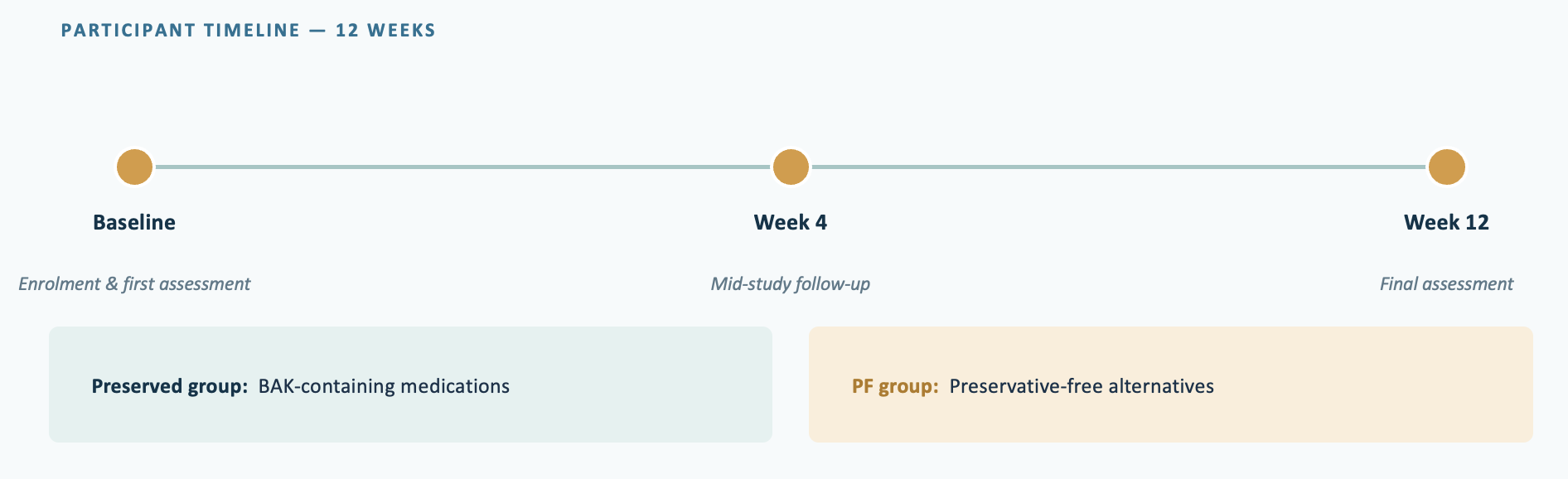
The primary outcome will be changes in patient-reported ocular surface symptoms, measured using the validated 12-item Ocular Surface Disease Index (OSDI-12). Secondary outcomes include measurements around the prevalence of dry eye disease and quantifying ocular surface damage through analysing tears for inflammatory markers, visualising oil glands damage and looking with specialised equipment at the surface of the eye with dyes.
By studying both patient-reported symptoms and objective clinical measurements, this study aims to provide a more complete understanding of how preserved and PF glaucoma medications affect the ocular surface over time. The findings may help identify clinically meaningful differences between preserved and PF alternatives on the patient’s experience with eyedrops, but also how it affects the ocular surface in various objective quantifiable ways.
In New Zealand, this study has important implications to advocating for improved access to preservative-free eyedrops. Providing locally relevant evidence on this topic may contribute to future decisions made around what is the optimal form of eyedrop therapy for glaucoma patients. Please keep an eye out for when this study becomes active and we are recruiting patients for this study – we would greatly appreciate your involvement.
Want to learn more about this study and the significance it has for New Zealand? Read more here.